Stamped concrete services in Garden City KS - a brick or stone look on solid ground
Plain gray patio or walk? We color and stamp a slab that looks like stone or brick, poured over packed ground.
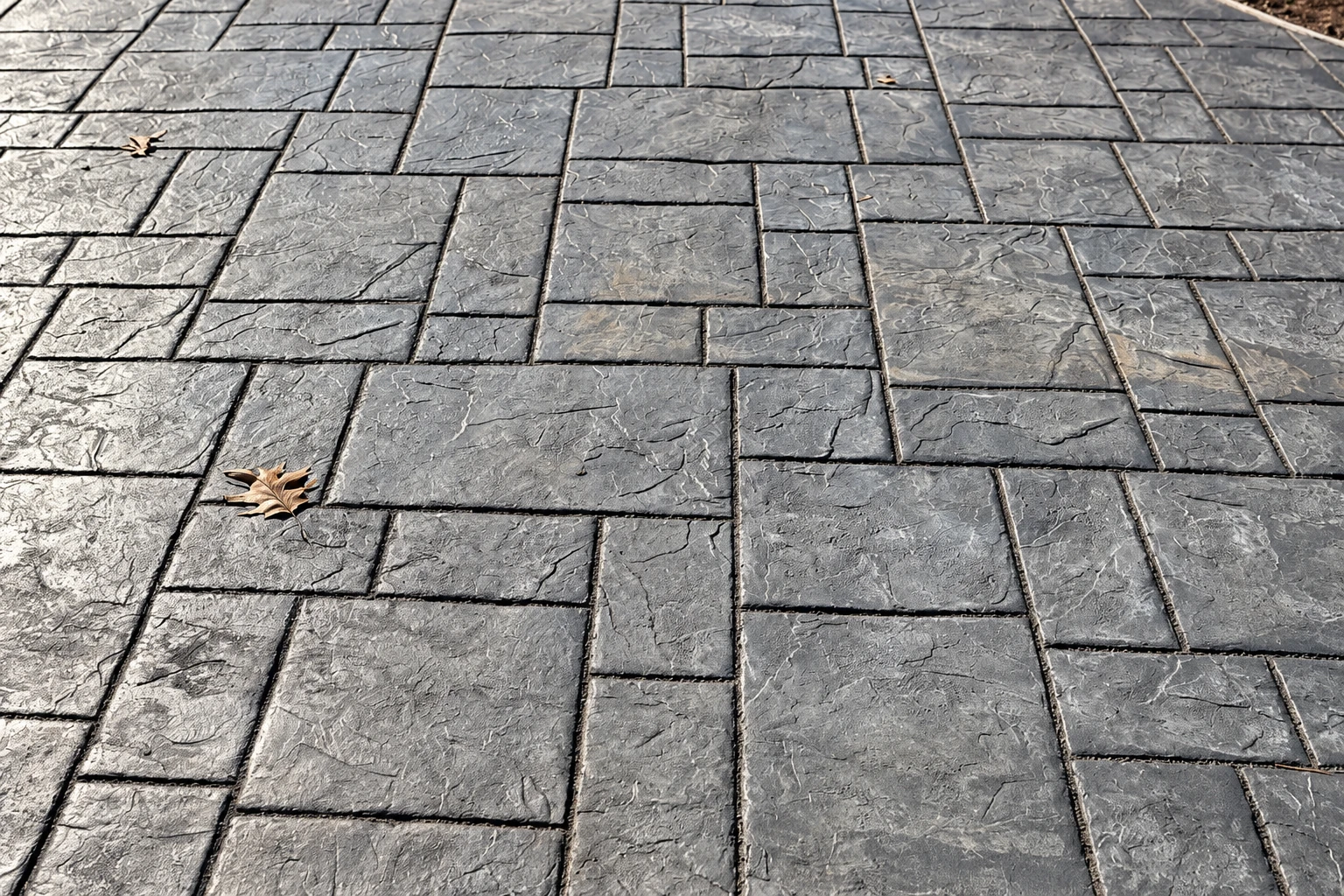
Stamped concrete is a regular poured slab that gets colored, pressed with rubber mats while it's still soft so it looks like stone, brick, wood or tile, then sealed. Folks in Garden City usually call us for stamped concrete services when a patio, a sidewalk or a driveway has gone gray, cracked or uneven, and they want a better look that's still solid concrete underneath.
We start underneath, because most trouble with a slab starts with the ground or with water. The price moves with the size, the pattern, the color method and how much digging the base needs. The schedule turns on pour-day weather and curing, the wait while the slab hardens before anyone uses it. Your estimate spells out each of those for your job.
What we do on a stamped concrete job
- Crew with me on site. Our crew does the stamping with me on site, so the person who walked the job with you is there on pour day.
- Packed ground under the pattern. The ground under the pattern gets the same care as the pattern itself, so we dig out and pack the subgrade, the dirt the slab sits on.
- Color picked by how it's used. We choose the color method by how the slab will get used, so a driveway and a back patio often get different treatment.
- Fully licensed and insured. We're fully licensed and insured, and you're welcome to ask to see both before we start any work at your house.
- Building slabs since 2013. I started this business in 2013 after years patching walks and slabs at rentals, which taught me most trouble starts underneath or with water.
Problems a new stamped slab fixes
| Problem | What it looks like | Usual fix |
|---|---|---|
| Worn, plain slab | What it looks like: Gray patio or walk that's chipped, stained and tired looking | Usual fix: Tear out and pour a new stamped slab |
| Sinking or uneven slab | What it looks like: Low spots, trip edges and water pooling after it rains | Usual fix: Remove it, dig out and pack the base, then pour |
| Cracks in random places | What it looks like: Cracks running across the slab instead of along a joint | Usual fix: Replace it and cut control joints, grooves that steer cracks |
| Water running toward the house | What it looks like: Slab falls toward the foundation, puddles by the back door | Usual fix: Replace it with a slope that drains away |
Your choices with stamped concrete
- Full stamped slab. We tear out the old slab and pour new, stamped edge to edge. It suits a slab that's sinking or cracked through, because the base gets redone too.
- Stamped border. A stamped border around a broom-finished middle, the brushed texture that gives shoes grip, costs less. If the budget's tight, trim the pattern, not the base under it.
- Reseal what you have. If an existing stamped slab is sound but dull, cleaning and resealing it often brings the color back up without pouring any new concrete.
How your stamped job runs
- You call, I come out. I come out to see the spot, check where the water runs and ask what you want, since how you'll use it decides the color method.
- An estimate that spells it out. You get an estimate that spells out the base work, pattern and color method, and I'm happy to go over it twice.
- Permit and locates. Before we start, we sort out the permit and the utility locates with you, so nobody digs into a buried line.
- Pour, stamp and cure. We pour, color and stamp, then let it cure. We rinse off the mat release once we can stand on it without marks, and seal after it dries.
- Walk-through and care. We walk it with you and go over care, like keeping deicer off the new slab even once it looks hard, since fresh concrete needs time first.
Keeping stamped concrete sound for years
What keeps a stamped slab sound later was mostly settled on pour day, in the base and in where the water runs. After that it comes down to keeping the sealer up and water moving off the slab, so give us a call if a corner settles or the color starts to dull.
Homeowners, landlords and small business owners in Garden City and the cities around it call us for stamped work and plain slabs, like a garage floor. If you've got a spot in mind, call and ask for a free estimate.
Tell us about your slab
Send the spot, rough size, how you'll use it and any color idea. We reply within one business day and set a time for me to come look.
(620) 315-5440- Free on-site estimate
- No obligation to book
- Base and color spelled out
Stamped concrete questions we hear
What is the difference between integral color and color hardener on stamped concrete?
Integral color runs through the whole slab, while color hardener is spread and floated into the top as a harder skin. Integral is more forgiving and a chip shows the same color, though it won't reach the deepest or brightest tones. Hardener is the usual pick for driveways, but deep damage shows gray and an uneven coat looks blotchy.
How often should stamped concrete be resealed?
One field guide advises resealing stamped concrete every 2 to 3 years, so it's worth planning on as part of keeping the finish. The same guide calls for two thin, even coats, since a heavy coat can bubble, turn white and get slick when it's wet.
Who handles permits for concrete work in Garden City, KS?
The city's Building Inspections Division handles reviews, inspections and approvals for construction in Garden City, Holcomb and Finney County. We'll pull the city permit when your job needs one, or help you through it if you'd rather apply yourself.
Does my concrete contractor need a Garden City license?
Yes, the city says any contractor or handyman you hire has to hold a Garden City contractor license, though you can hire a plain laborer yourself. The city's license list includes a concrete contractor class, so it's fair to ask each bidder which class they hold.
Can I put stamped concrete between the curb and sidewalk in Garden City?
Usually yes, if it sits between the back of the curb and a sidewalk set back from it, since city standards allow colored or patterned concrete there. Other spots near the street need the city's approval first, so ask before you plan on one.