Concrete sidewalk building in Garden City KS - a walk built to city standards
Cracked, tilted or missing sidewalk out front? We dig out soft ground, pack a solid base and pour a level walk that drains.
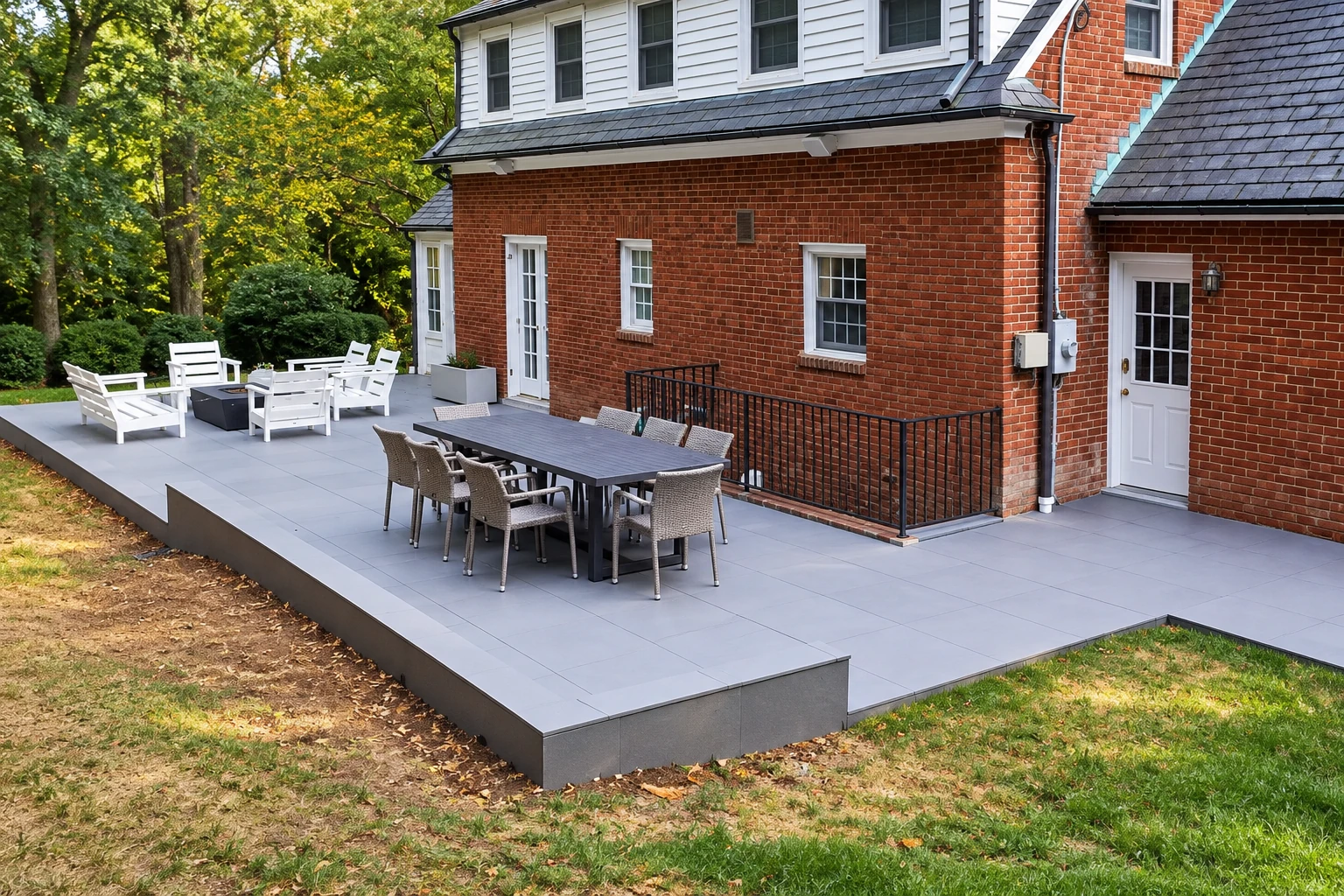
In Garden City, the sidewalk in front of your house is yours to repair, so when panels sink, crack or tip up into a trip edge, it's on you to fix. Concrete sidewalk building in Garden City means tearing out the bad walk, or starting where there isn't one, and pouring a new one on a solid base to the city's sidewalk standards.
Price moves with how much old walk comes out, how much soft ground we dig out under it, the length and width, and any thicker stretch across your driveway. The schedule mostly turns on the permit and utility locates, then the pour and curing. I put our time into the base and drainage, as on a garage floor, because a nice finish can't save a weak base. Your estimate spells out what we'll do and what it costs.
How we build a concrete sidewalk
- I come out myself. I learned concrete patching walks at rentals and have run this business since 2013. I come out to look at your walk myself, and our crew works with me on site.
- Licensed and insured, ask to see it. We're fully licensed and insured. Ask to see proof of both when I come out, because you should check that before anyone pours on your property.
- A dug-out, packed base. We clear sod, weeds and debris, replace any soft, spongy ground with approved fill as the city's standards call for, and pack the subgrade, the dirt the walk sits on, evenly.
- Sized to the city's standard. The city's standard for a home's walk is 5 feet wide, or matching the sidewalk already on your block, and we pour it thicker where it crosses your driveway.
- Joints cut, top broomed. We cut control joints, grooves that give shrinking concrete a chosen place to crack, and broom the top so it has a texture that grips when it's wet.
What goes wrong with old sidewalks
| Problem | What it looks like | Usual fix |
|---|---|---|
| Sunken panels | What it looks like: Sections dropped below their neighbors, leaving a lip you trip on | Usual fix: Dig out, pack the base, pour new panels |
| Cracks in odd places | What it looks like: Cracks running across panels instead of along the joints | Usual fix: Replace sections and cut joints on time |
| Pooling water | What it looks like: Puddles on the walk or water draining toward your foundation | Usual fix: Regrade and pour with a fall away from the house |
| Flaking, dusty top | What it looks like: Surface peeling in patches or wearing to grit after winter | Usual fix: Replace worn panels with the right mix and curing |
Fix a few panels or start over
- Replace sections. Suits a walk where a few panels sank or cracked and the rest still sits level, because we cut out the bad ones and pour new to match.
- Full new walk. Makes sense when most of the walk is broken or heaved, or there's no walk at all, since you get one base and one pour end to end.
- Decorative or brick. City standards call for concrete, but decorative concrete or paving bricks can be used under certain conditions with the city's Public Works Department approval. Get that approval before we plan around it.
How your sidewalk job runs
- You call, I come out. I come out to look at the walk, check where the water runs and ask what you want from it.
- Your estimate. You get an estimate that spells out the tear-out, the base work, the width, the joints and the finish, so you know what you're paying for.
- Permit and locates. We settle the permit and locates with you, since locating utilities falls on whoever signs the permit. Cost-share jobs get a city pre-inspection before any concrete moves.
- Dig, pour and cure. Our crew digs out, packs the base, pours and finishes, then the concrete cures, staying damp and undisturbed while it gains strength.
- Walk it together. We walk the finished job with you and go over how to care for it, like how long to stay off it and what to put down on ice.
Keeping your walk in good shape
A walk stays sound when water runs off it and the salt stays light, so we slope it away from your house. Keep the joints clear of dirt and weeds, and call if a panel starts to settle.
Homeowners, landlords and small business owners in Garden City and the cities around it call us for walks, steps and slabs. Every job is backed by our satisfaction guarantee. Call (620) 315-5440 or use the form to ask for an estimate.
Tell us about your sidewalk
Send your address, whether it sits within City limits and the walk's rough length. We'll reply within one business day to set a time to come look.
(620) 315-5440- Free on-site estimate
- No obligation to hire
- Every step spelled out
Sidewalk questions we hear
How much does a new concrete sidewalk cost in Garden City?
A new concrete sidewalk, installed, usually costs about $6 to $15 per square foot across the US, and that's a national range, not our price. Where yours lands depends on the tear-out, how much soft ground comes out and any thicker stretch at the driveway, and I'll price it on site.
Do I need a permit to build a sidewalk in Garden City?
Sidewalk work under the city's cost share needs a Building Permit before construction, and the city's Building Inspections Division handles reviews, inspections and approvals for all construction, so check other walks with them. We'll pull the permit when your job needs one, or help you through it if you'd rather apply.
Who can I hire to build a sidewalk in Garden City?
If you hire a handyman or contractor, the city says that person has to be licensed by the City of Garden City. You can still hire a laborer, but non-licensed help can't be used, so ask anyone you're considering to show their city license.
Can the city help pay for a new sidewalk in Garden City?
It can, through a cost share of up to $1,000 from the city's Sidewalk Program for existing sidewalks and driveway approaches within City limits, with no income qualifications. It can also fill gaps between existing sidewalks, and the permit comes at no cost. I'll help you check whether it fits before I price the job.
Will a new sidewalk hold up to winter salt in Garden City?
It holds up best when the mix and the cure are right, since national concrete guidance names surface scaling, a flaking of the top layer, as the most common frost damage and ties it to de-icing salt. Entrained air, tiny bubbles in the mix, and good curing both help prevent it, so ask us about both before the pour.