
Concrete Steps Construction in Garden City KS - an entry that drains away from the house
Cracked, sinking or crumbling front steps? We build poured or precast steps on a packed base, with the landing sloped away from your house.
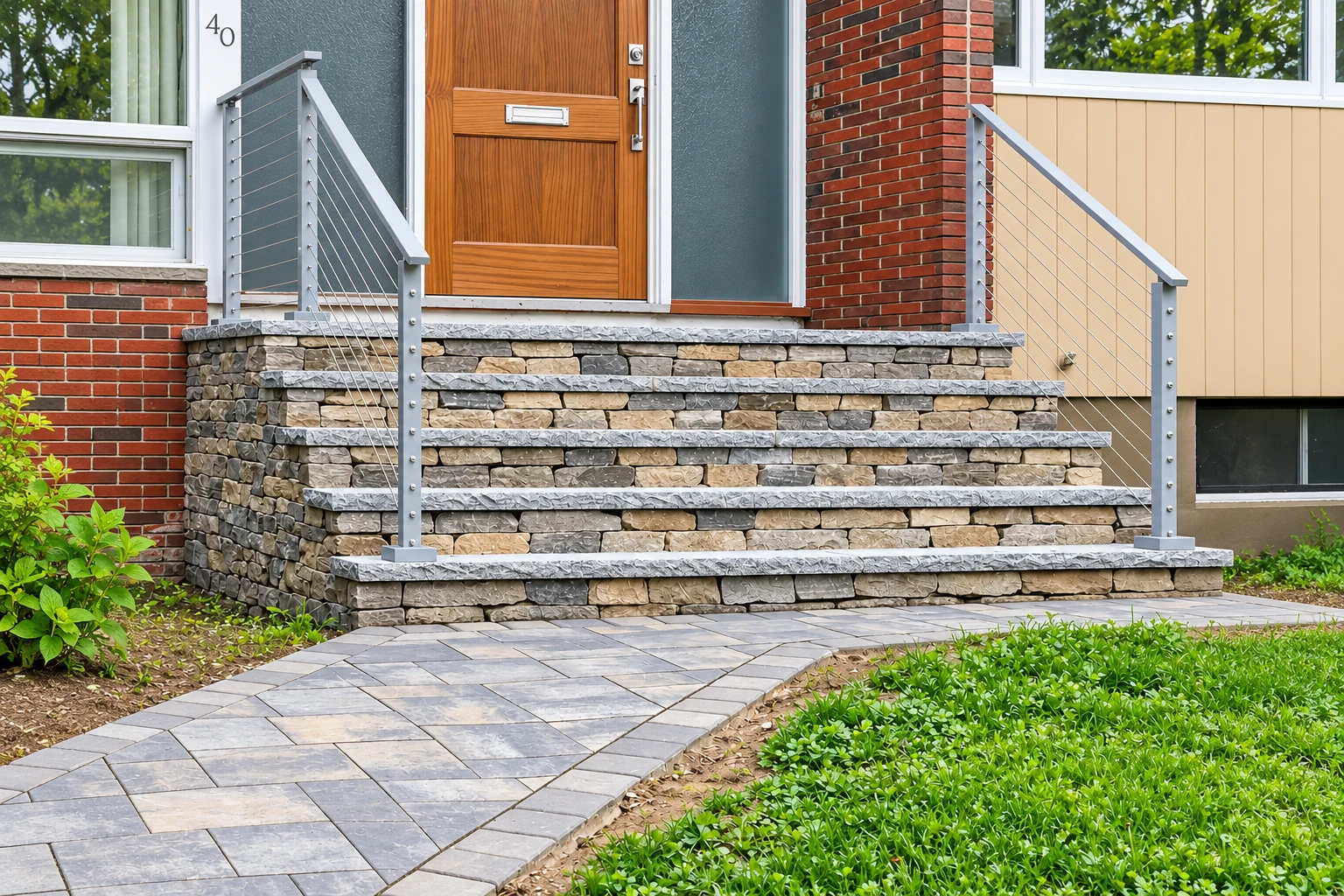
Concrete steps get built one of two ways. They're poured in place at your house, or they're set from precast pieces that arrive by truck. Most folks call us when the old steps have cracked, pulled away from the door or started sinking. Usually the trouble started underneath or with water, so that's where we spend our time.
The price mostly turns on how many steps you need, poured or precast, the size of the landing and whether old steps have to come out first. The schedule turns on the method, since poured steps have to cure, or harden, at your house. It also turns on the city permit when your job needs one. If your steps go on a new addition, we also do the slab foundation building or foundation installation under it. Your estimate spells out exactly what we'll do.
What our concrete steps work covers
- Poured or precast, your pick. I come out to look at your entry myself and go over poured and precast steps with you, so you can pick what suits the house and the budget.
- A dug-out, packed base. Before I started this business in 2013, I patched rental steps that had settled on raked dirt. So we dig out and pack the subgrade, the ground the steps sit on.
- Landing sloped off the house. Any landing by the house gets sloped so water runs away from your foundation instead of soaking in along it.
- Poured and finished with grip. Our crew pours and finishes the steps with me on site, and a broom finish, a light brushed texture, gives the treads grip when they're wet.
- Licensed and insured on your job. We're fully licensed and insured, and I'm happy to show you that paperwork before we start digging.
What goes wrong with old steps
| Problem | What it looks like | Usual fix |
|---|---|---|
| Sinking or tipping steps | What it looks like: Steps dropped, tilted toward the yard or pulled away from the door | Usual fix: New steps on a dug-out, packed base |
| Water toward the house | What it looks like: Puddles on the landing or wet spots along the foundation wall | Usual fix: Rebuilt landing sloped down and away from the house |
| Flaking, dusty treads | What it looks like: Top surface chipping, powdering or peeling off after a few winters | Usual fix: New pour, finished and cured before anyone uses it |
| Cracks in odd places | What it looks like: Cracks running across treads or where the steps meet the landing | Usual fix: Rebuild with control joints, cut grooves that guide cracks |
Patch, precast or poured steps
- Patch what's there. This suits steps that are solid and level but have a chipped edge or a small crack. A patch won't fix steps that are sinking or tipping.
- Precast steps. These suit a plain entry where you want less waiting at the house. The pieces still need a packed base, and we prepare it the same way.
- Poured steps. These suit an entry with an odd shape, a wide landing or steps that need to meet a walk, because we form them right at your house.
How your steps job runs
- I come out. You call, and I come out to look at your entry and ask what you want from it, including how you use that door.
- Your estimate. You get an estimate that spells out what we'll do, from tearing out the old steps to which way the landing slopes.
- Permit and locates. We sort out the city permit with you when the job needs one, and its approval can take up to 3 business days. We plan the start around that.
- Dig, form and pour. Once the utility locates are done, our crew digs out, packs the base and pours or sets the steps. Any inspection gets booked at least 24 hours ahead.
- Cure and walk-through. The steps cure before you put them to use. Then I walk them with you and go over how to care for them.
Steps that hold up after we leave
What keeps steps sound is mostly what you can't see on day one, which is the base and where the water goes. If the budget has to give somewhere, I'd rather trim the finish than the base, because a nice surface on settled ground cracks just the same.
We build for homeowners, landlords and small business owners in Garden City and the cities around it. I don't mind going over the job twice. Call (620) 315-5440 or send the form, and we'll set up your free estimate.
Tell us about your steps
Send photos of your current entry, how many steps you need and whether you lean poured or precast. We'll reply within one business day to set a visit.
(620) 315-5440- Free on-site estimate
- No obligation to hire
- The work spelled out
Questions about concrete steps
Should I choose poured or precast concrete steps in Garden City?
Pick precast if you want the shortest wait at the house, and pick poured if your entry needs a custom shape or a wide landing. One precast maker's guide notes that precast pieces finish their main curing before delivery, while poured steps have to cure at your house. I'll go over both with you on site.
Who handles concrete permits and inspections in Garden City?
The city's Building Inspections Division handles reviews, inspections and approvals for construction in Garden City, Holcomb and Finney County. Ask them whether your steps need a permit. Inspections can be booked through the city's online portal or at 620-276-1120, and we'll pull the permit when your job needs one or help you apply yourself.
Can I hire a handyman or laborer for my own concrete steps?
You can hire a laborer. Under the city's permit, any handyman or contractor you hire has to be licensed by the City of Garden City, and its license list includes a concrete contractor class. Contractors applying for that license file proof of at least $500,000 in general liability coverage, so ask to see it.
How much do concrete steps cost in Garden City?
Installed poured concrete steps across the US usually run about $200 to $500 per step. That's a national figure, not a Garden City price. Your number depends on how many steps you need, the landing, tearing out old steps and poured versus precast, and the on-site estimate gives you ours.
Will new concrete steps hold up to freezing weather?
They hold up better when the concrete has entrained air, tiny bubbles spread evenly through the mix that give freezing water room so the pressure doesn't break the surface. If your steps see freezing weather, ask whoever pours them whether the mix includes it.
Which way should the landing by my front door slope?
It should slope down and away from the house. Building guidance says porch slabs, walks and paved surfaces within 10 feet of the foundation should slope that way. We slope any landing by the house so water runs off it instead of toward your foundation.