Skilled concrete parking lot building in Garden City KS - a lot that drains and holds up
Got a gravel lot full of ruts, or old paving that's cracked and holding water? We build concrete parking lots that drain and hold up.
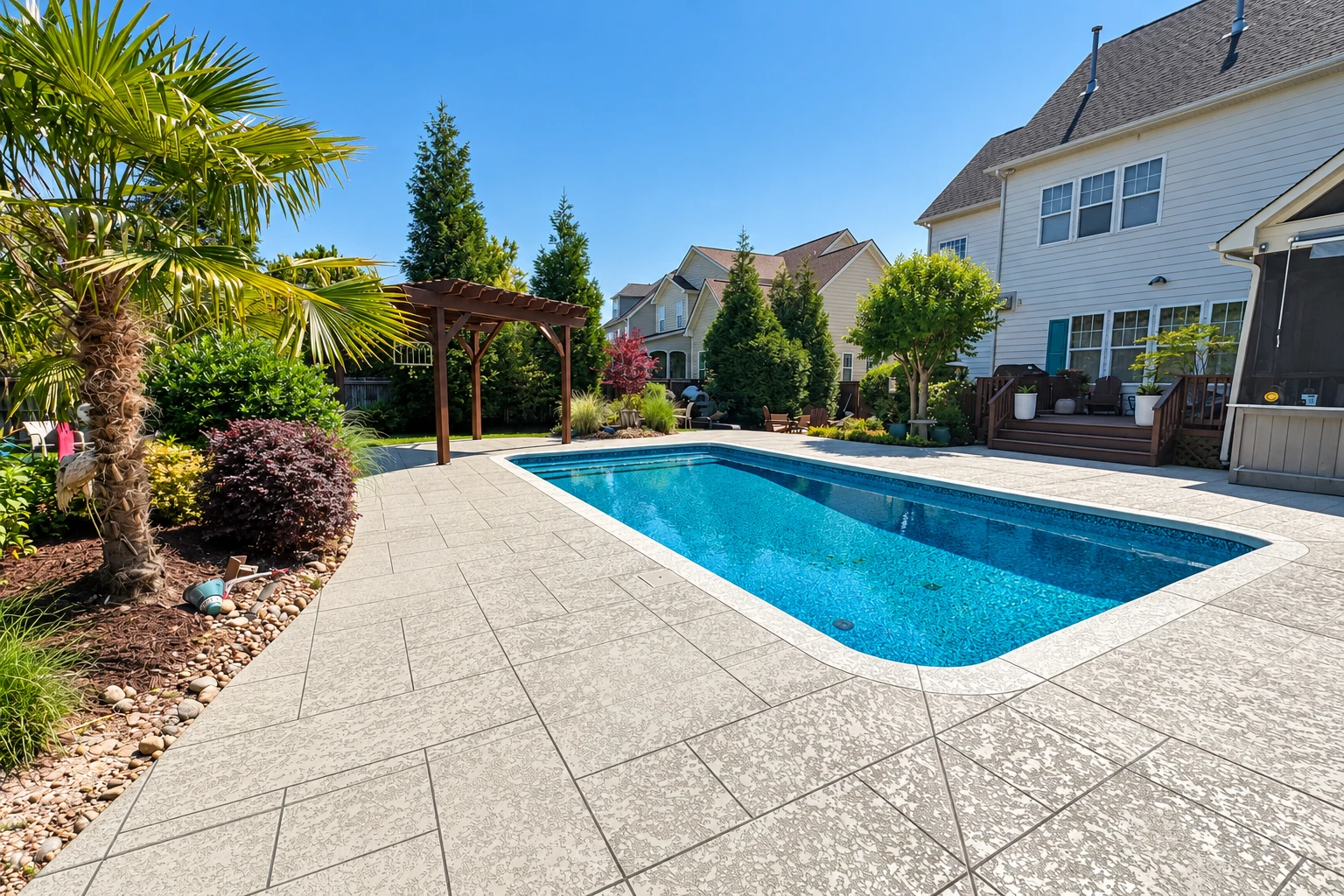
Concrete parking lot building in Garden City is paving made for cars and trucks, and a lot built for that work can give many years of service with little upkeep. Most calls come from business owners and landlords with a rutted gravel lot, an old lot that's cracked and holding water, or a new building that needs parking.
The price moves with the lot's size, how much base work the ground needs, drainage and curbs, and whether old paving has to come out first. The schedule turns on the city's review of your site plan and on pouring well before the first freeze. Your estimate spells out what we'll do, and we can pour concrete footings for light poles as part of the same job.
How we build a concrete parking lot
- Seen by me, built by our crew. I've run this business since 2013, and I come out to look at your lot myself. Our crew does the work with me on site.
- Base dug out and packed. We dig out and pack the subgrade, the ground the slab sits on. On a tight budget I'd trim the finish before the base, because a settling base cracks any top.
- Joints cut where we choose. We cut control joints, grooves that give the slab a planned place to crack, while the concrete's still young, so cracks follow those lines instead of wandering across panels.
- Licensed and insured for your job. Garden City's contractor license has a class for concrete contractors, so it's fair to ask anyone bidding about theirs. We're fully licensed and insured.
What goes wrong with parking lots
| Problem | What it looks like | Usual fix |
|---|---|---|
| Sunken panels | What it looks like: Low spots, tipped slabs and trip edges where panels meet | Usual fix: Cut out, rebuild and pack the base, then repour |
| Standing water | What it looks like: Puddles that sit for days and ice patches near the doors | Usual fix: Regrade so water runs where the site plan sends it |
| Flaking surface | What it looks like: Top layer peeling off in thin chips after a few winters | Usual fix: Replace with a mix made to handle freezing |
| Cracks across panels | What it looks like: Cracks wandering through the middle of panels instead of along joints | Usual fix: Seal small cracks, replace broken panels with joints cut on time |
| Settling by the building | What it looks like: Walk and pavement dropping where they meet the building wall | Usual fix: Rebuild the base, and check whether foundation raising is needed |
Patch, replace panels or build new
- Patch and seal. This suits a lot that's mostly sound with a few hairline cracks or a worn spot, where sealing the cracks buys time without tearing anything out.
- Replace failed panels. This makes sense when a few sections have sunk or broken and the rest sits flat, because we can cut those out, fix the base and repour.
- Build a new lot. This is the right call for new construction, or when the base has given out across most of the lot, since patches won't stop it settling.
How a lot job runs with us
- I come out first. You call, and I come out to walk the lot with you and ask how it gets used and what you want from it.
- Your estimate. You get an estimate that spells out what we'll do, from the base work to the joints, so you know what you're paying for first.
- Plan review and locates. City planning staff approve your site plan before work begins, and a typical review takes 7 to 14 days, so we schedule around it and settle utility locates with you.
- Pour, finish and cure. We pour and add a broom finish, a light dragged texture that gives tires and shoes grip. Then the concrete cures, slowly hardening before anyone drives on it.
- Walk it together. We walk the finished lot with you, go over how to care for it and tell you when it's ready for traffic.
Keeping your lot sound for years
What wears a lot down over time is mostly water, salt and what leaks out of parked cars. An earlier edition of the industry's parking lot guide calls that kind of wear often the biggest upkeep concern on lightly used lots, and a sealer can help keep water and salt out, so we'll talk sealing over with you.
We're based in Garden City and work in the cities around it, for small business owners, landlords and homeowners who want the job explained before we pour. If you've got a lot coming up, ask us for an estimate and I'll come take a look.
Tell us about your lot
Send the property address, rough lot size and any stamped site plan. We reply within one business day and set a time for me to come out.
(620) 315-5440- Free on-site estimate
- No obligation to hire us
- Every step spelled out
Parking lot questions we hear
Does a parking lot in Garden City need a stamped site plan?
Yes, if the property is commercial, industrial or multi-family with three or more units, because Garden City requires a site plan for those, stamped by a licensed Kansas architect or engineer. We work from that stamped plan, so the design work comes before any concrete.
Who approves parking lot construction in Garden City, KS?
The city's Building Inspections Division reviews and approves all construction work in Garden City, and a site that disturbs an acre or more also needs stormwater permit authorization. We'll pull the city permit when your job needs one, or help you through it if you'd rather apply yourself.
How is drainage approved for a new parking lot in Garden City?
The City Engineer reviews the drainage on your site plan and checks that it fits the subdivision's drainage plan. Smaller plans show which way water runs with arrows, while bigger developments need a detailed drainage plan. During the job the city wants stormwater kept clean, especially at construction entrances, so we keep ours tidy.
What kind of concrete holds up to freezing in Kansas?
Extension guidance says paved surfaces should be air-entrained concrete, which has tiny air bubbles mixed in, with proper cement content to prevent scaling, the flaking freeze-thaw causes. It also says new concrete should cure and air dry at least 30 days before the first freeze, so we talk through the mix with you and plan fall pours around that.
What should I ask a concrete contractor before hiring them for a lot?
Ask to see their certificate of insurance, since Garden City contractor license applicants provide one with at least $500,000 in general liability coverage. It's also worth asking how they'll prepare the base and handle drainage. We're glad to show you ours and go over any of it twice.